Depth
Gobius · Bony Fish

Giant Goby

Gobius cobitis

0-10m
Depth Range
27cm
Max Size
Mediterranean
Distribution
0-10m
Depth Range
27cm
Max Size
Rocky shore
Habitat
Omnivore
Diet
Territorial
Social
LC
IUCN Status
High
Sighting Likelihood
Kingdom Animalia
Phylum Chordata
Class Actinopterygii
Genus Gobius
Species cobitis

Identification & Biology

  • IdentificationLarge, robust goby with a massive head and thick, muscular body. Dark olive-brown to black with faint lighter mottling. Small eyes set high on the head. The largest goby in the Mediterranean.
  • SizeUp to 27 cm total length, commonly 12 to 20 cm.
  • Social HabitSolitary and territorial. Aggressive toward other gobies. Males guard eggs in rocky crevices.
  • HabitatRocky intertidal and shallow subtidal zones, rock pools, and harbour walls. Prefers sheltered areas with abundant cover.
  • DepthIntertidal to 10 m, predominantly in very shallow water.
  • Feeds OnAlgae, crustaceans, worms, molluscs, and other small invertebrates. An omnivorous opportunist.
  • DistributionEastern Atlantic from the British Isles to Senegal, including the Mediterranean Sea.
  • DescriptionThe Mediterranean's largest goby, easily recognised by its hefty build and dark colouration. Despite its size, it is a shy species that darts for cover when approached. Found in rock pools and shallow subtidal areas, it is most commonly encountered by snorkellers and shore divers exploring rocky coastlines.

Habitat & Distribution

Inhabits the shallow rocky intertidal and subtidal zone, from rockpools down to about 10 metres depth. In Malta, it is found along rocky coastlines in sheltered bays, crevices and under overhangs in very shallow water.

Where Malta divers have spotted this species

Loading…

Sightings are logged by divers using our What Did You See? dive-log tool. View the full live sightings map.

Detail

Preferred Environment

Prefers shallow rocky habitats with abundant crevices, algae-covered boulders and sheltered overhangs. Commonly found in rockpools, harbour walls and calm areas of rocky shoreline.

Encounter Tips

Best approached slowly and calmly. Avoid casting shadows directly over the animal. Neutral buoyancy and patience increase encounter success significantly.
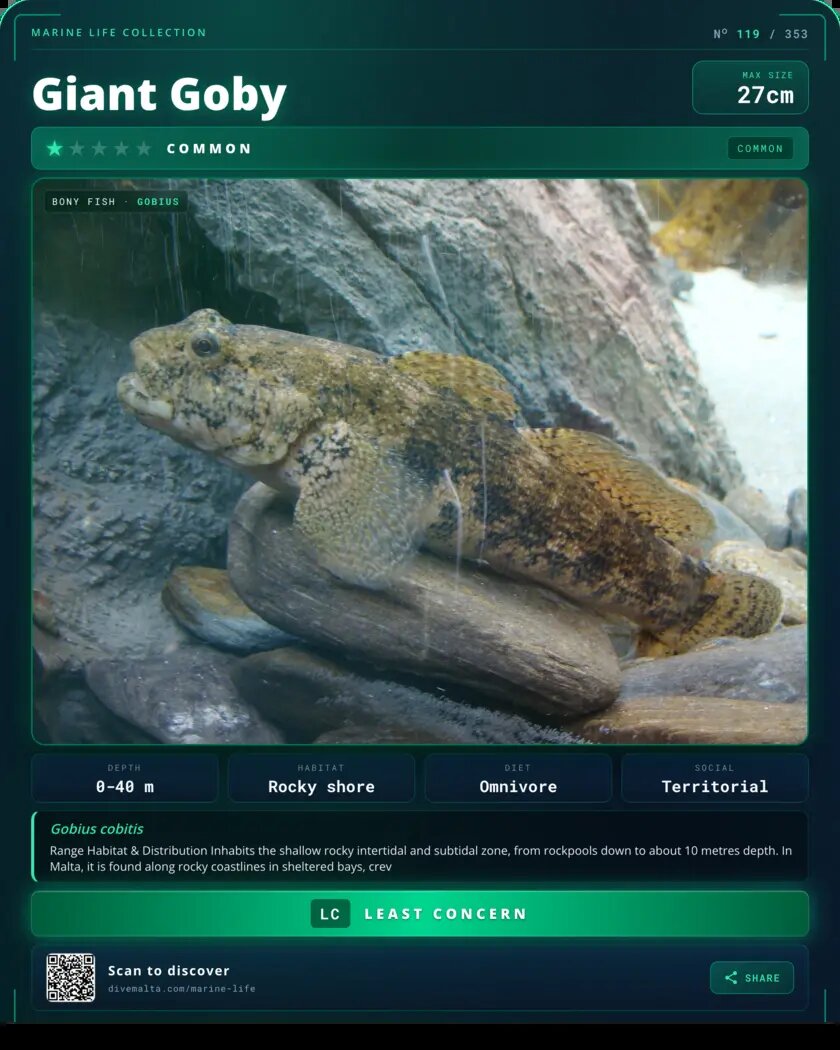
Giant Goby species card

Behaviour & Diet

Feeding Strategy

An opportunistic omnivore that feeds on algae, small crustaceans, worms, molluscs and organic detritus. Forages actively across rocky surfaces, scraping and picking food from the substrate.

Opportunistic Feeder

Reproduction

Males guard egg clutches deposited under rocks or in crevices, fanning them to ensure oxygenation. Breeding occurs from spring through summer, with males aggressively defending nest sites.

Nest Guarder

Behaviour & Defence

Extremely territorial, defending its home crevice aggressively against intruders. When disturbed, it retreats rapidly into tight rock crevices where its large body blocks the entrance.

Territorial & Cryptic

Where to Encounter in Malta

Dive sites where Gobius cobitis may be encountered will be added as sighting data is collected.

IUCN Red List Least Concern

Conservation Status

This species is assessed as Least Concern on the IUCN Red List. Mediterranean populations face ongoing pressure from fishing activity, habitat degradation, and climate-driven changes.

Source: IUCN Red List
diveshack Mediterranean Marine Life guide