Depth
Sprattus · Bony Fish

European Sprat

Sprattus sprattus

0-150m
Depth Range
16cm
Max Size
Mediterranean
Distribution
0-150m
Depth Range
16cm
Max Size
Pelagic
Habitat
Planktivore
Diet
Schooling
Social
LC
IUCN Status
Moderate
Sighting Likelihood
KingdomAnimalia
PhylumChordata
ClassActinopterygii
GenusSprattus
Speciessprattus

Identification & Biology

  • IdentificationVery small, slender fish similar to a sardine but with a sharp, keeled belly. Blue-green back with bright silver flanks. Lower jaw projects slightly beyond the upper.
  • SizeUp to 16 cm total length, commonly 8 to 12 cm.
  • Social HabitExtremely gregarious, forming dense schools near the surface, often mixed with young sardines and anchovies.
  • HabitatCoastal and offshore surface waters. Found in bays, estuaries, and open water.
  • DepthSurface to 150 m, most common in the upper 50 m.
  • Feeds OnZooplankton including copepods, small crustaceans, and fish larvae.
  • DistributionEastern Atlantic from Norway to Morocco, including the Mediterranean and Black Sea.
  • DescriptionA tiny but ecologically vital fish that forms massive schools along Mediterranean coasts. Sprats are a key prey species for almost every larger predator in the sea, from mackerel to dolphins. Together with sardines and anchovies, they form the foundation of the Mediterranean pelagic food web.

Habitat & Distribution

Found from the surface to around 150 m depth in coastal and offshore waters. Forms enormous schools in mid-water, particularly in shallower areas during feeding.

Where Malta divers have spotted this species

Loading…

Sightings are logged by divers using our What Did You See? dive-log tool. View the full live sightings map.

Detail

Preferred Environment

Favours inshore and coastal pelagic waters, including bays, estuaries, and areas near river outflows where plankton productivity is high.

Encounter Tips

Best approached slowly and calmly. Avoid casting shadows directly over the animal. Neutral buoyancy and patience increase encounter success significantly.
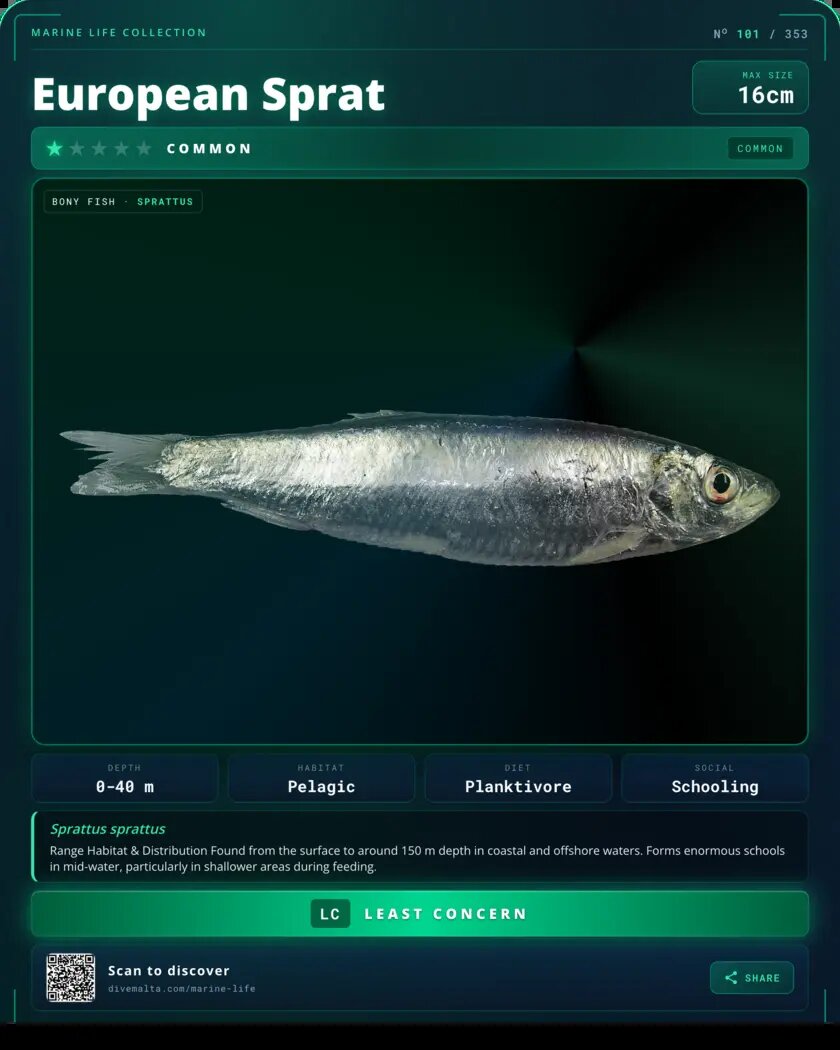
European Sprat species card

Behaviour & Diet

Feeding Strategy

Filters tiny planktonic organisms from the water column, including copepods, diatoms, and fish eggs. Feeds continuously while swimming in dense schools.

Filter feeder

Reproduction

Spawns in batches from winter to summer depending on the region. Pelagic eggs hatch within days, and larvae join existing schools quickly.

Batch spawner

Behaviour & Defence

Dense schooling creates a shimmering, confusing mass that makes it difficult for predators to isolate individuals. The belly scutes may deter smaller predators.

Mass schooling

Where to Encounter in Malta

Dive sites where Sprattus sprattus may be encountered will be added as sighting data is collected.

IUCN Red ListLeast Concern

Conservation Status

This species is assessed as Least Concern on the IUCN Red List. Mediterranean populations face ongoing pressure from fishing activity, habitat degradation, and climate-driven changes.

Source: IUCN Red List
diveshack Mediterranean Marine Life guide