Depth
Apterichtus · Bony Fish

European Finless Eel

Apterichtus caecus

5 - 100 m
Depth Range
60 cm
Max Size
Mediterranean
Distribution
5 - 100 m
Depth Range
60 cm
Max Size
Sandy / Muddy
Habitat
Carnivore
Diet
Solitary
Social
LC
IUCN Status
Low
Sighting Likelihood
KingdomAnimalia
PhylumChordata
ClassActinopterygii
GenusApterichtus
Speciescaecus

Identification & Biology

  • IdentificationExtremely slender, worm-like body completely lacking fins. Smooth, scaleless skin. Pale pinkish-brown colour. Tiny, almost vestigial eyes covered by skin.
  • SizeUp to 60 cm total length, typically around 30 to 40 cm.
  • Social HabitSolitary and burrowing. Lives entirely within soft sediment and is almost never seen in the open.
  • HabitatSandy and muddy bottoms where it burrows completely into the substrate on the continental shelf and upper slope.
  • Depth10 to 500 m, most common between 20 and 100 m.
  • Feeds OnSmall invertebrates encountered within the sediment.
  • DistributionEastern Atlantic from Portugal to West Africa and throughout the Mediterranean Sea.
  • DescriptionOne of the most unusual Mediterranean fish, looking more like a large worm than an eel. It has no fins at all and its eyes are vestigial, covered by skin. It lives entirely buried in substrate and is almost never encountered by divers.

Habitat & Distribution

A burrowing eel found in sandy and muddy substrates from 5 to 100 m depth across the Mediterranean. Spends most of its time buried in the sediment with only the tip of the snout exposed.

Where Malta divers have spotted this species

Loading…

Sightings are logged by divers using our What Did You See? dive-log tool. View the full live sightings map.

Detail

Preferred Environment

Sandy and muddy bottoms where it can burrow easily. Prefers fine to medium-grained sand in coastal to shelf-depth waters. Often found in areas with some organic detritus content in the sediment.

Encounter Tips

Extremely difficult to spot as it spends most of its time buried. Occasionally emerges partially from the sand, with just the head visible. Night dives offer the best chance of encountering active individuals.
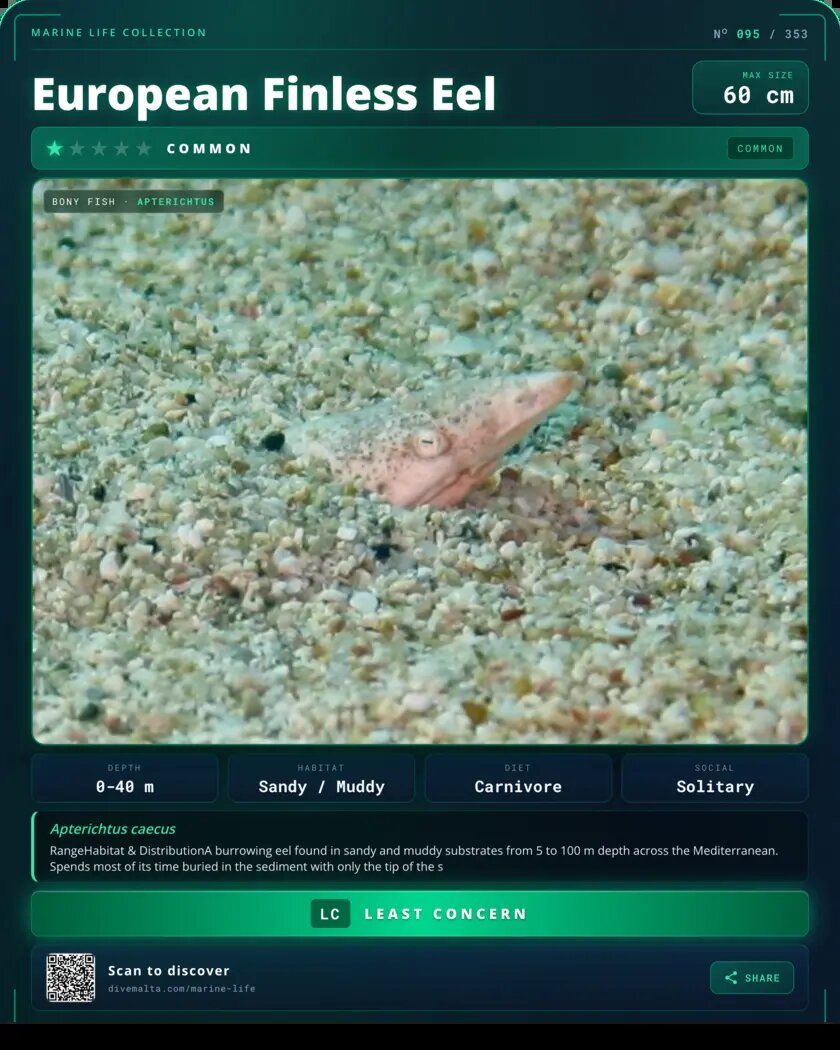
European Finless Eel species card

Where to Encounter in Malta

Dive sites where Apterichtus caecus may be encountered will be added as sighting data is collected.

IUCN Red ListLeast Concern

Conservation Status

This species is assessed as Least Concern on the IUCN Red List. Mediterranean populations face ongoing pressure from fishing activity, habitat degradation, and climate-driven changes.

Source: IUCN Red List
diveshack Mediterranean Marine Life guide