Range
Habitat & Distribution
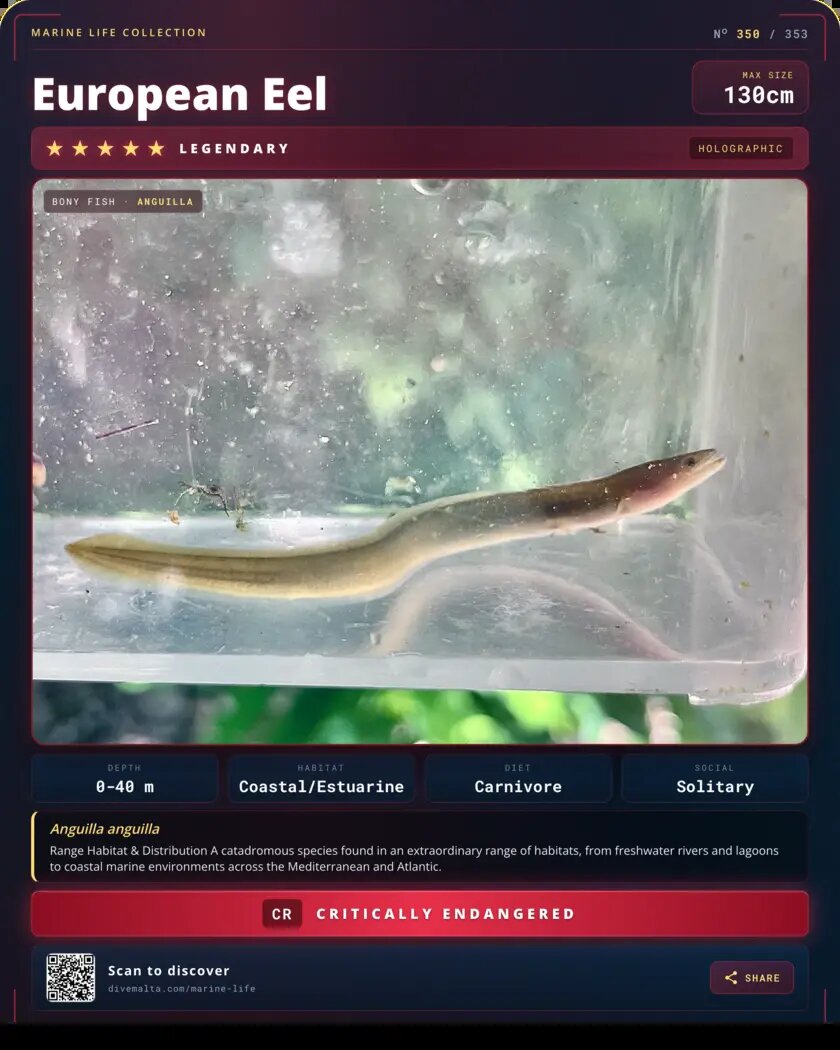
A catadromous species found in an extraordinary range of habitats, from freshwater rivers and lagoons to coastal marine environments across the Mediterranean and Atlantic. Adults migrate to the deep ocean to spawn.
Where Malta divers have spotted this species
Sightings are logged by divers using our What Did You See? dive-log tool. View the full live sightings map.
Detail
Preferred Environment
Encountered in rocky crevices, seagrass beds, and muddy or sandy bottoms in coastal waters. Juveniles (elvers) are found in estuaries and freshwater. Nocturnal and secretive by nature.
Encounter Tips
Best approached slowly and calmly. Avoid casting shadows directly over the animal. Neutral buoyancy and patience increase encounter success significantly.