Depth
Callionymus · Bony Fish

Dragonet

Callionymus spp.

5-100m
Depth Range
30cm
Max Size
Mediterranean
Distribution
5-100m
Depth Range
30cm
Max Size
Sandy seabed
Habitat
Carnivore
Diet
Solitary
Social
LC
IUCN Status
Rare
Sighting Likelihood
Kingdom Animalia
Phylum Chordata
Class Actinopterygii
Genus Callionymus
Species spp.

Identification & Biology

  • IdentificationSmall, flattened body with a triangular head when viewed from above. Large, fan-shaped pectoral fins. Males have an elongated first dorsal fin. Variable colouration from sandy brown to mottled with blue and yellow patches.
  • SizeUp to 14 cm total length, commonly 8 to 10 cm.
  • Social HabitSolitary and bottom-dwelling. Males display the tall first dorsal fin to rivals and during courtship.
  • HabitatSandy and muddy bottoms from the shallows to moderate depths. Rests directly on the substrate.
  • Depth5 to 100 m, most common between 10 and 50 m.
  • Feeds OnSmall benthic invertebrates including worms, crustaceans, and tiny molluscs.
  • DistributionEastern Atlantic from the British Isles to West Africa, including the Mediterranean Sea.
  • DescriptionA small, beautifully marked bottom-dweller that shuffles across sandy substrates on its finger-like pelvic fins. Males are more colourful than females and display their tall dorsal fin like a flag. Despite being relatively common on sandy bottoms, dragonets are easily missed due to their small size and excellent camouflage.

Habitat & Distribution

Found on sandy, muddy and fine gravel bottoms from shallow coastal waters to around 100 metres depth. In the Mediterranean, dragonets are common on open sandy patches near seagrass meadows and rocky reef margins.

Where Malta divers have spotted this species

Loading…

Sightings are logged by divers using our What Did You See? dive-log tool. View the full live sightings map.

Detail

Preferred Environment

Prefers soft sediment habitats where it partially buries itself for camouflage. Frequently encountered on Posidonia meadow edges and open sandy flats between rocky areas.

Encounter Tips

Best approached slowly and calmly. Avoid casting shadows directly over the animal. Neutral buoyancy and patience increase encounter success significantly.
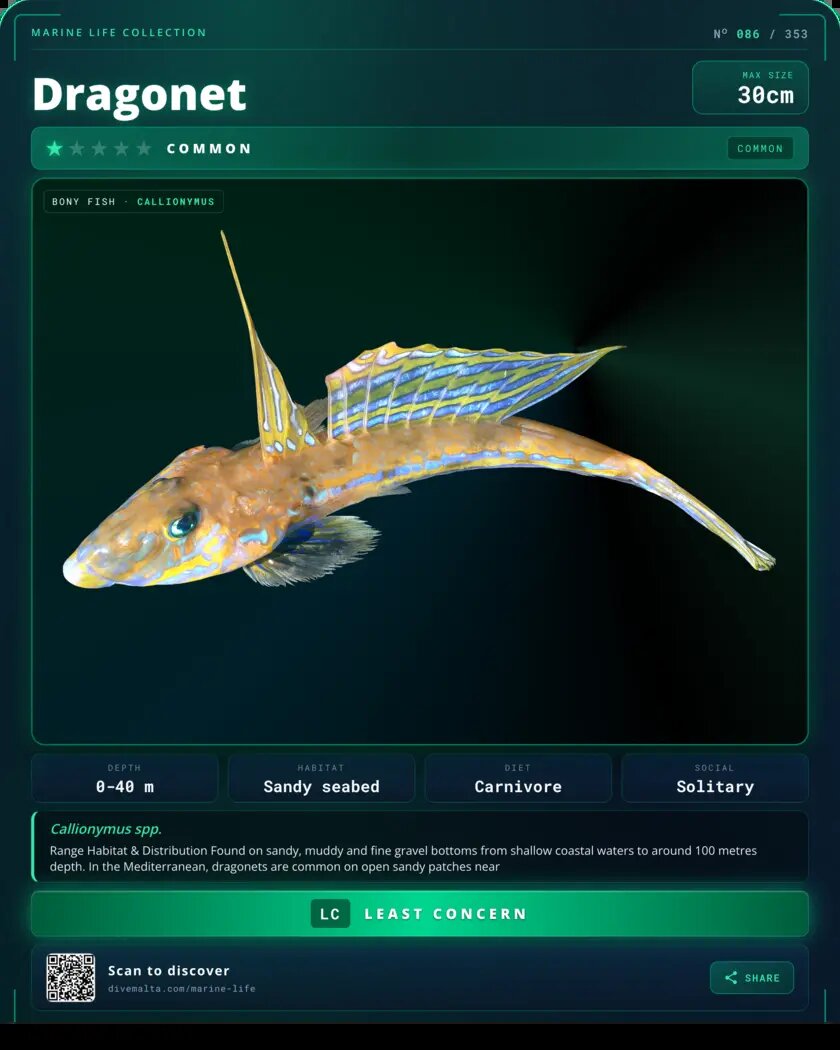
Dragonet species card

Behaviour & Diet

Feeding Strategy

Feeds on small benthic invertebrates including worms, tiny crustaceans and molluscs, using its protrusible mouth to pick prey from the sediment surface.

Benthic Grazer

Reproduction

Males perform elaborate courtship displays, extending their colourful dorsal fins to attract females. Pairs rise together in the water column to release eggs and sperm simultaneously at dusk.

Courtship Display

Behaviour & Defence

Relies heavily on camouflage, pressing flat against the seabed and matching sediment colour. Some species also possess a mildly venomous preopercular spine as a secondary deterrent.

Camouflage & Venom

Where to Encounter in Malta

Dive sites where Callionymus spp. may be encountered will be added as sighting data is collected.

IUCN Red List Least Concern

Conservation Status

This species is assessed as Least Concern on the IUCN Red List. Mediterranean populations face ongoing pressure from fishing activity, habitat degradation, and climate-driven changes.

Source: IUCN Red List
diveshack Mediterranean Marine Life guide