Depth
Clinitrachus · Bony Fish

Cline

Clinitrachus argentatus

0-15m
Depth Range
10cm
Max Size
Mediterranean
Distribution
0-15m
Depth Range
10cm
Max Size
Rocky reef
Habitat
Carnivore
Diet
Solitary
Social
LC
IUCN Status
Moderate
Sighting Likelihood
KingdomAnimalia
PhylumChordata
ClassActinopterygii
GenusClinitrachus
Speciesargentatus

Identification & Biology

  • IdentificationSmall, elongated blenny-like fish with a single long dorsal fin. Grey-brown body with a pattern of irregular dark bars and a prominent dark stripe through the eye. Pointed snout.
  • SizeUp to 10 cm total length, commonly 5 to 7 cm.
  • Social HabitSolitary and cryptic. Rests motionless among algae-covered rocks.
  • HabitatRocky reefs with abundant algal cover, particularly in sheltered areas with good water circulation.
  • Depth1 to 20 m, most common between 2 and 10 m.
  • Feeds OnTiny crustaceans, worms, and other small invertebrates found among algae.
  • DistributionMediterranean Sea and adjacent eastern Atlantic. Most common in the western Mediterranean.
  • DescriptionA well-camouflaged, blenny-like fish that sits motionless among algae on rocky reefs. Despite being relatively common, its excellent camouflage and sedentary habits mean it is easily missed. Belongs to the clinid family rather than true blennies.

Habitat & Distribution

A shallow-water species found from the surface to about 15 m depth. Inhabits rocky shores, boulder fields, and areas with dense algal cover.

Where Malta divers have spotted this species

Loading…

Sightings are logged by divers using our What Did You See? dive-log tool. View the full live sightings map.

Detail

Preferred Environment

Prefers sheltered rocky habitats with abundant algae and crevices. Commonly found on rocky walls, under ledges, and among boulders in the shallow subtidal zone.

Encounter Tips

Best approached slowly and calmly. Avoid casting shadows directly over the animal. Neutral buoyancy and patience increase encounter success significantly.
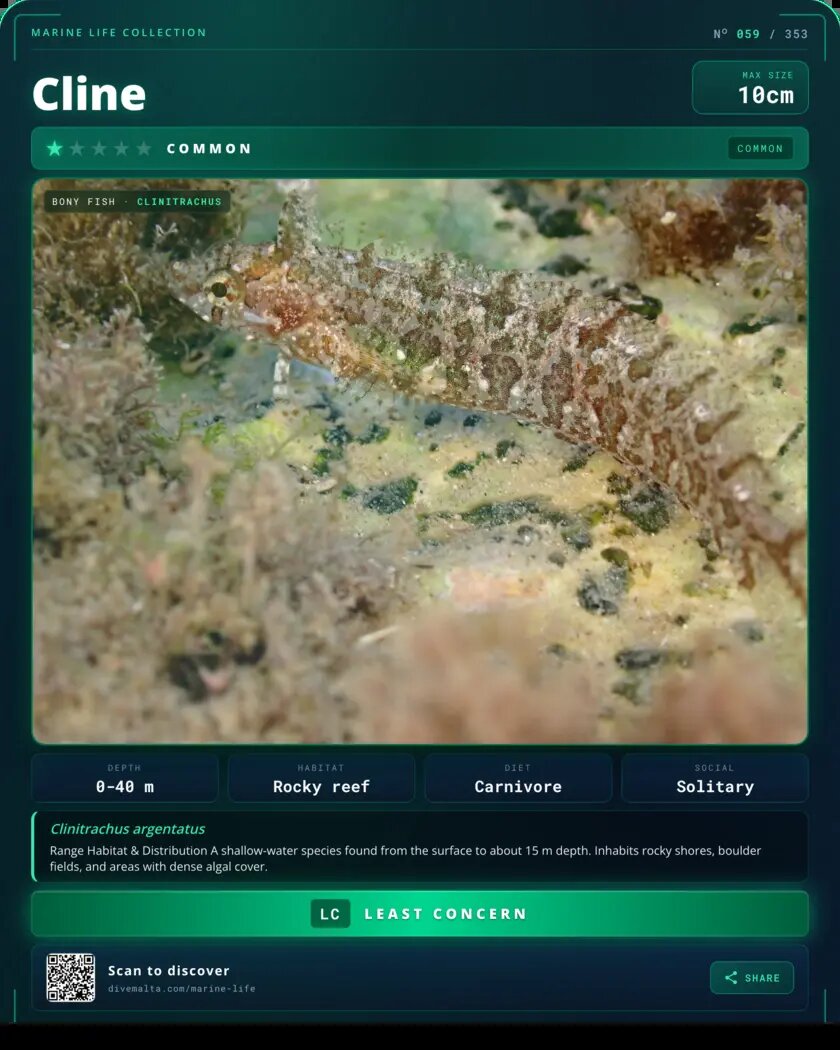
Cline species card

Behaviour & Diet

Feeding Strategy

Feeds on small invertebrates, including amphipods, tiny crustaceans, and worms picked from rock surfaces and algal tufts.

Micro-predator

Reproduction

Males guard egg clutches deposited on rock surfaces or inside crevices. The male fans and defends the eggs until hatching occurs.

Nest guarder

Behaviour & Defence

Highly cryptic colouration blends seamlessly with rocky and algae-covered surfaces. Remains motionless when threatened, relying on camouflage.

Cryptic camouflage

Where to Encounter in Malta

Dive sites where Clinitrachus argentatus may be encountered will be added as sighting data is collected.

IUCN Red ListLeast Concern

Conservation Status

This species is assessed as Least Concern on the IUCN Red List. Mediterranean populations face ongoing pressure from fishing activity, habitat degradation, and climate-driven changes.

Source: IUCN Red List
diveshack Mediterranean Marine Life guide