Depth
Blennius · Bony Fish

Butterfly Blenny

Blennius ocellaris

0-30m
Depth Range
20cm
Max Size
Mediterranean
Distribution
0-30m
Depth Range
20cm
Max Size
Rocky reef
Habitat
Omnivore
Diet
Solitary
Social
LC
IUCN Status
Moderate
Sighting Likelihood
Kingdom Animalia
Phylum Chordata
Class Actinopterygii
Genus Blennius
Species ocellaris

Identification & Biology

  • IdentificationSmall blenny with a large, rounded head and a high, sail-like first dorsal fin marked with a prominent dark eyespot (ocellus). Body is yellowish-brown with darker bands. Fringed tentacles above the eyes.
  • SizeUp to 20 cm total length, commonly 10 to 15 cm.
  • Social HabitSolitary and retiring. Spends most of its time inside holes and crevices with only the head visible.
  • HabitatRocky reefs, boulder fields, and muddy areas with suitable holes. Often found in empty bivalve shells and tube-worm holes.
  • Depth5 to 100 m, most common between 10 and 50 m.
  • Feeds OnSmall invertebrates including crustaceans, worms, and bryozoans.
  • DistributionEastern Atlantic from the British Isles to Morocco, including the entire Mediterranean Sea.
  • DescriptionNamed for the striking eyespot on its tall first dorsal fin, which is raised as a display when the fish feels threatened. The butterfly blenny peeks out from its hole with a comically alert expression and can be quite curious about divers who remain still nearby.

Habitat & Distribution

Found on rocky reefs and mixed substrates across the Mediterranean from shallow water to around 30m. Prefers areas with abundant crevices and overhangs where it can shelter.

Where Malta divers have spotted this species

Loading…

Sightings are logged by divers using our What Did You See? dive-log tool. View the full live sightings map.

Detail

Preferred Environment

Inhabits rocky reefs with good shelter options, including caves, overhangs, and holes in the substrate. Often found sitting on ledges near its chosen refuge.

Encounter Tips

Best approached slowly and calmly. Avoid casting shadows directly over the animal. Neutral buoyancy and patience increase encounter success significantly.
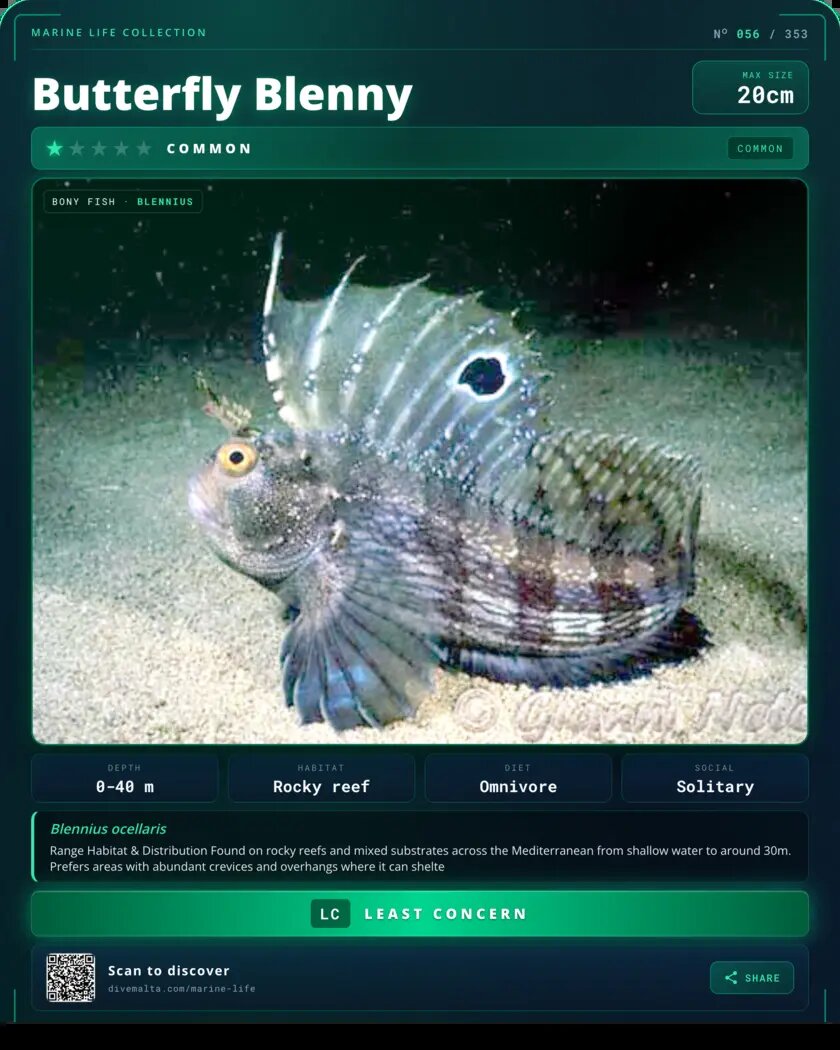
Butterfly Blenny species card

Behaviour & Diet

Feeding Strategy

An omnivore that feeds on small invertebrates, worms, algae, and detritus picked from the surrounding rocky substrate.

Omnivorous browser

Reproduction

Males establish nesting cavities in rock crevices and court females with head-bobbing displays. Eggs are guarded and aerated by the male until hatching.

Cavity nester

Behaviour & Defence

Raises its dorsal fin to display the conspicuous eyespot when threatened, creating the illusion of a much larger animal. Retreats into crevices if the bluff fails.

Eyespot bluff

Where to Encounter in Malta

Dive sites where Blennius ocellaris may be encountered will be added as sighting data is collected.

IUCN Red List Least Concern

Conservation Status

This species is assessed as Least Concern on the IUCN Red List. Mediterranean populations face ongoing pressure from fishing activity, habitat degradation, and climate-driven changes.

Source: IUCN Red List
diveshack Mediterranean Marine Life guide