Depth
Oedalechilus · Bony Fish

Boxlip Mullet

Oedalechilus labeo

0 - 20 m
Depth Range
40 cm
Max Size
Mediterranean
Distribution
0 - 20 m
Depth Range
40 cm
Max Size
Coastal
Habitat
Omnivore
Diet
Schooling
Social
LC
IUCN Status
Moderate
Sighting Likelihood
KingdomAnimalia
PhylumChordata
ClassActinopterygii
GenusOedalechilus
Specieslabeo

Identification & Biology

  • IdentificationTorpedo-shaped mullet with a distinctive thick upper lip that is swollen and papillose. Grey-green back with silver flanks. Relatively small head.
  • SizeUp to 25 cm total length, commonly 15 to 20 cm.
  • Social HabitForms small schools, often mixing with other mullet species in shallow water.
  • HabitatShallow coastal waters, lagoons, estuaries, and harbours. Prefers sandy and muddy substrates close to shore.
  • Depth0 to 20 m, most common in very shallow water.
  • Feeds OnOrganic detritus, algae, and tiny invertebrates sucked from the sediment surface using its specialised lips.
  • DistributionEastern Atlantic from the Bay of Biscay to West Africa, including the Mediterranean Sea.
  • DescriptionA small mullet distinguished by its unusually thick, fleshy upper lip, which it uses to vacuum food from sandy and silty substrates. Often seen in harbours and shallow bays, it moves in small groups just above the bottom.

Habitat & Distribution

Found in shallow coastal waters from the surface to about 20 m depth across the Mediterranean. Prefers sandy and rocky coastlines with clear water. Less common in estuarine habitats than other mullet species.

Where Malta divers have spotted this species

Loading…

Sightings are logged by divers using our What Did You See? dive-log tool. View the full live sightings map.

Detail

Preferred Environment

Sandy and rocky coastal environments with clear water. Less associated with harbours and estuarine conditions than other mullets. Prefers open coastal areas with moderate wave exposure and clean substrates.

Encounter Tips

Look for schools of mullet along open sandy-rocky coastlines. The boxlip mullet prefers cleaner water conditions than harbour-dwelling species. The distinctive lip shape is visible at close range.
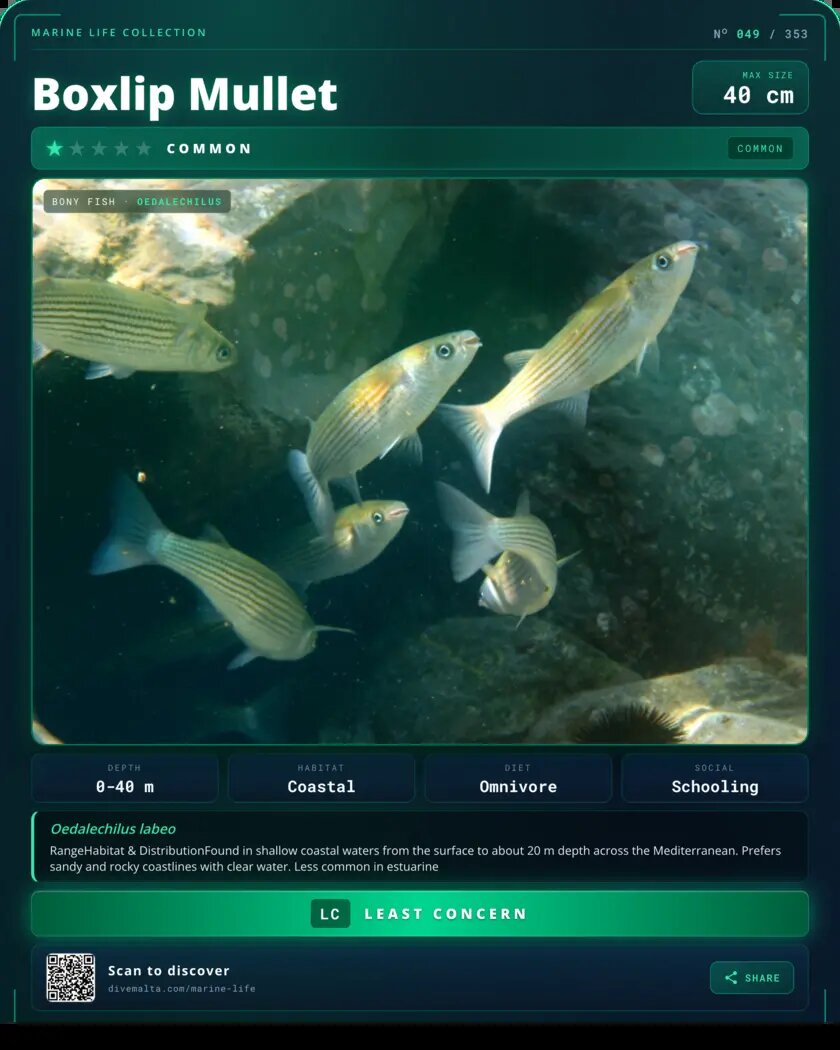
Boxlip Mullet species card

Where to Encounter in Malta

Dive sites where Oedalechilus labeo may be encountered will be added as sighting data is collected.

IUCN Red ListLeast Concern

Conservation Status

This species is assessed as Least Concern on the IUCN Red List. Mediterranean populations face ongoing pressure from fishing activity, habitat degradation, and climate-driven changes.

Source: IUCN Red List
diveshack Mediterranean Marine Life guide