Depth
Tursiops · Bony Fish

Bottlenose Dolphin

Tursiops truncatus

0-250m
Depth Range
400cm
Max Size
Mediterranean
Distribution
0-250m
Depth Range
400cm
Max Size
Coastal pelagic
Habitat
Carnivore
Diet
Pods
Social
LC
IUCN Status
Moderate
Sighting Likelihood
Kingdom Animalia
Phylum Chordata
Class Mammalia
Genus Tursiops
Species truncatus

Identification & Biology

  • IdentificationLarge marine mammal with a robust, streamlined body. Grey colouration, darker on the back and lighter on the belly. Prominent curved dorsal fin. Distinctive bottle-shaped snout (rostrum) with a permanent 'smile'.
  • SizeUp to 380 cm total length and 650 kg. Mediterranean individuals tend to be smaller, typically 250 to 300 cm.
  • Social HabitHighly social, living in groups (pods) of 2 to 15 individuals, occasionally forming larger aggregations. Complex social bonds and cooperative behaviour.
  • HabitatCoastal and offshore waters. The Mediterranean population is largely coastal, frequenting bays, harbours, and areas near fishing activity.
  • DepthSurface to 300 m, but primarily active near the surface.
  • Feeds OnFish including mullet, seabream, and octopus. Hunts cooperatively, sometimes driving fish against the shore or surface.
  • DistributionWorldwide in temperate and tropical seas. The Mediterranean population is resident year-round.
  • DescriptionThe most commonly encountered cetacean in Mediterranean waters. Bottlenose dolphins are intelligent, curious animals that sometimes approach dive boats and snorkellers. The Mediterranean population faces threats from pollution, overfishing of prey species, and accidental bycatch. They are protected throughout the EU.

Habitat & Distribution

Inhabits coastal and offshore waters from the surface to depths of around 250 metres, though it typically forages in the upper water column. In the Mediterranean, resident populations maintain home ranges along productive coastlines and around island archipelagos.

Where Malta divers have spotted this species

Loading…

Sightings are logged by divers using our What Did You See? dive-log tool. View the full live sightings map.

Detail

Preferred Environment

Prefers productive coastal waters near headlands, underwater ridges and areas where upwelling or current convergence concentrates prey. In Malta, sightings are most common between Comino and northern Malta.

Encounter Tips

Best approached slowly and calmly. Avoid casting shadows directly over the animal. Neutral buoyancy and patience increase encounter success significantly.
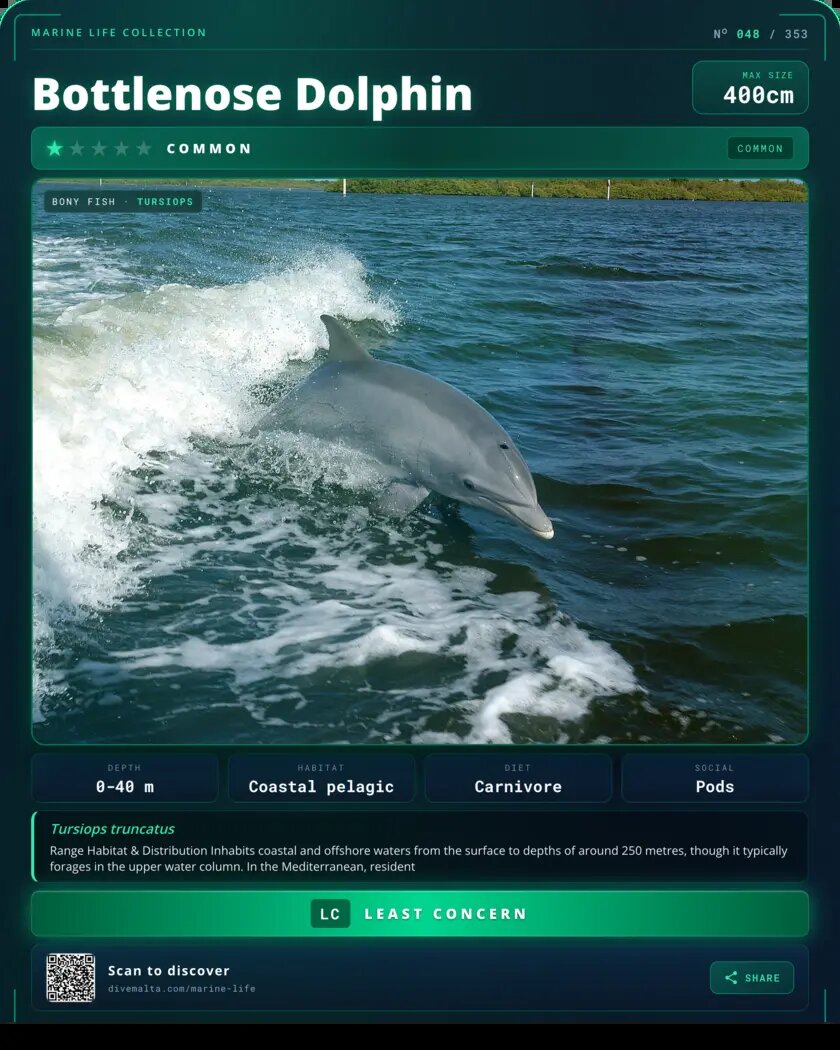
Bottlenose Dolphin species card

Behaviour & Diet

Feeding Strategy

An intelligent, adaptable predator that feeds on a wide range of fish, squid and crustaceans. Uses echolocation to detect prey and employs cooperative hunting strategies including herding fish against the surface.

Echolocation Hunter

Reproduction

Females give birth to a single calf after a 12-month gestation period. Calves nurse for up to two years and remain with their mothers for several years, learning essential foraging and social skills.

Extended Maternal Care

Behaviour & Defence

Large size, intelligence and social cooperation make adult dolphins virtually immune to predation. Pods collectively protect calves by surrounding them and mobbing potential threats such as sharks.

Social Protection

Where to Encounter in Malta

Dive sites where Tursiops truncatus may be encountered will be added as sighting data is collected.

IUCN Red List Least Concern

Conservation Status

This species is assessed as Least Concern on the IUCN Red List. Mediterranean populations face ongoing pressure from fishing activity, habitat degradation, and climate-driven changes.

Source: IUCN Red List
diveshack Mediterranean Marine Life guide