Range
Habitat & Distribution
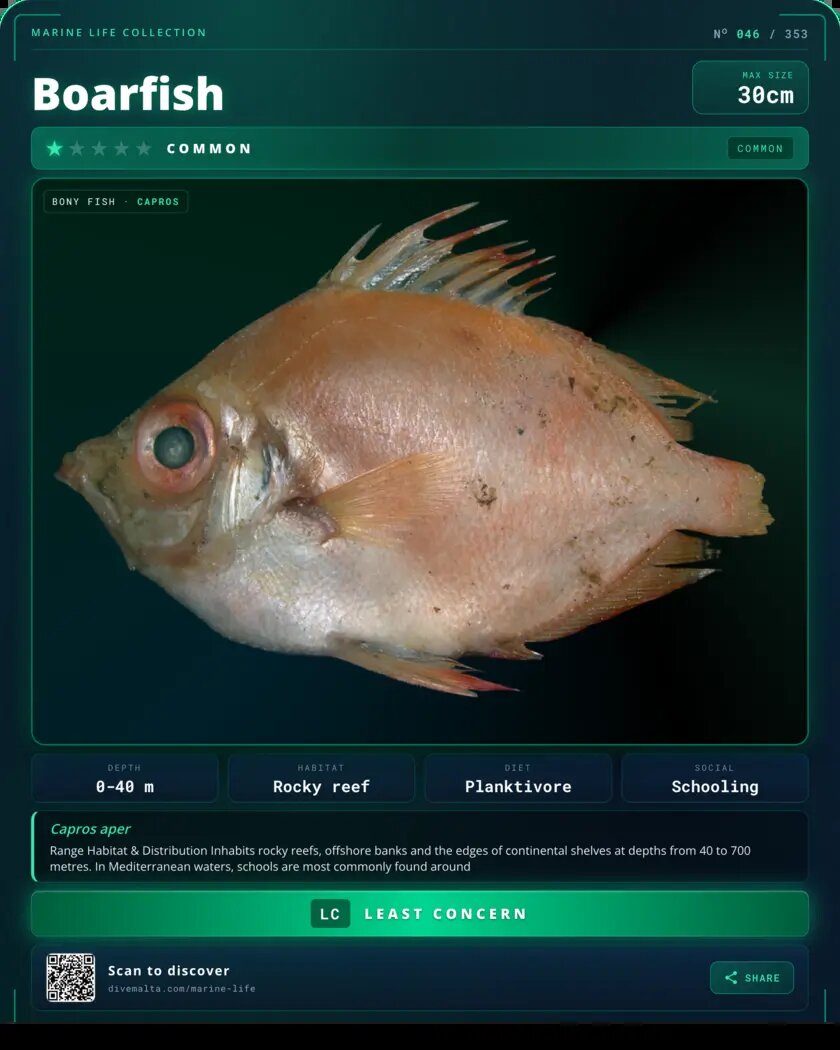
Inhabits rocky reefs, offshore banks and the edges of continental shelves at depths from 40 to 700 metres. In Mediterranean waters, schools are most commonly found around rocky outcrops and underwater ridges with moderate current.
Where Malta divers have spotted this species
Sightings are logged by divers using our What Did You See? dive-log tool. View the full live sightings map.
Detail
Preferred Environment
Prefers deep rocky habitats with good water flow that carries planktonic food. Often aggregates around seamounts, wrecks and rocky pinnacles in the open sea.
Encounter Tips
Best approached slowly and calmly. Avoid casting shadows directly over the animal. Neutral buoyancy and patience increase encounter success significantly.