Depth
Micromesistius · Bony Fish

Blue Whiting

Micromesistius poutassou

100-600m
Depth Range
50cm
Max Size
Mediterranean
Distribution
100-600m
Depth Range
50cm
Max Size
Mesopelagic
Habitat
Carnivore
Diet
Large schools
Social
LC
IUCN Status
Low
Sighting Likelihood
KingdomAnimalia
PhylumChordata
ClassActinopterygii
GenusMicromesistius
Speciespoutassou

Identification & Biology

  • IdentificationSlender, elongated body with a bluish-grey back, silver flanks, and white belly. Three dorsal fins and two anal fins. Lower jaw projects slightly beyond the upper.
  • SizeUp to 50 cm total length, commonly 20 to 30 cm.
  • Social HabitHighly gregarious, forming large pelagic schools that can extend over vast areas. Often mixes with other small pelagic species.
  • HabitatOpen water over the continental shelf and slope. Mesopelagic, spending daylight hours in deeper water and rising toward the surface at night.
  • Depth100 to 1,000 m during the day, shallower at night.
  • Feeds OnZooplankton, especially krill and copepods, along with small fish and squid.
  • DistributionNortheastern Atlantic from Norway to North Africa and throughout the Mediterranean Sea.
  • DescriptionA commercially important pelagic species that forms some of the largest fish schools in the northeast Atlantic. Blue whiting undergo daily vertical migrations, rising from deep water at night to feed on plankton near the surface. They are an essential prey species for larger predators including tuna, dolphins, and seabirds.

Habitat & Distribution

Occupies deep-water habitats between 100 and 600 metres over continental slopes. In the Mediterranean, most common in the western basin and around the Strait of Sicily. Rarely seen by divers due to depth.

Where Malta divers have spotted this species

Loading…

Sightings are logged by divers using our What Did You See? dive-log tool. View the full live sightings map.

Detail

Preferred Environment

Mid-water above continental slopes and deep trenches. Undertakes diel vertical migrations, feeding nearer the surface at night.

Encounter Tips

Best approached slowly and calmly. Avoid casting shadows directly over the animal. Neutral buoyancy and patience increase encounter success significantly.
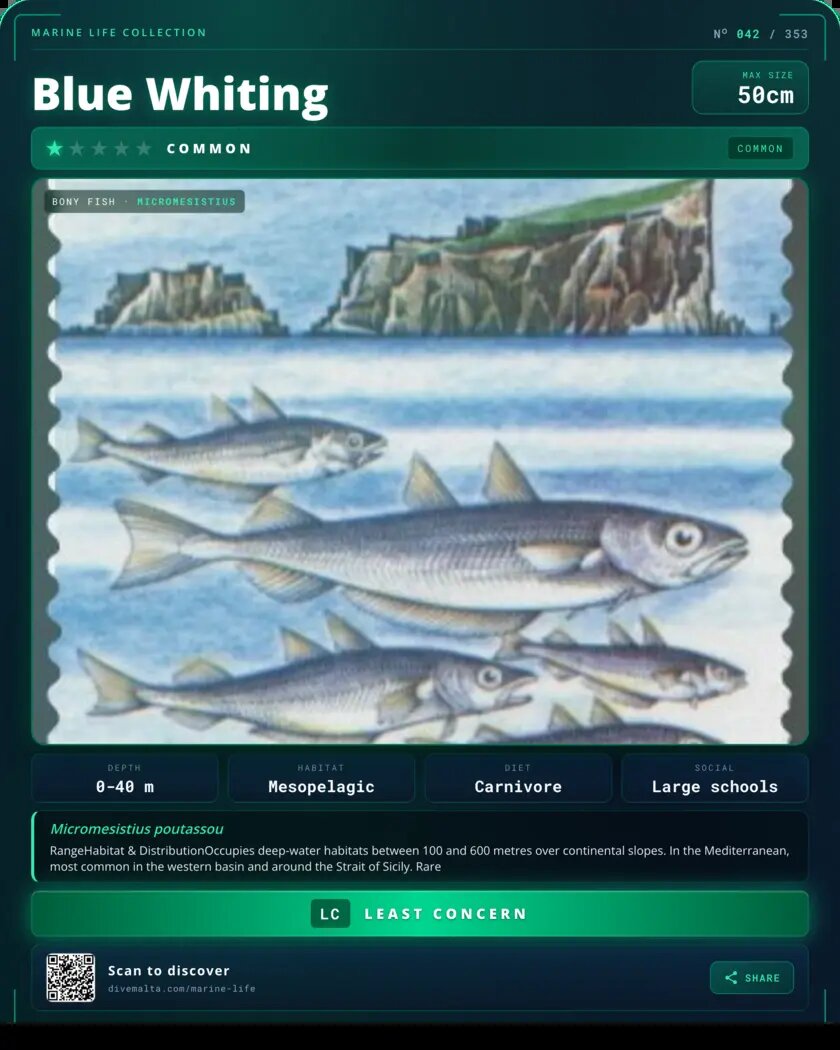
Blue Whiting species card

Where to Encounter in Malta

Dive sites where Micromesistius poutassou may be encountered will be added as sighting data is collected.

IUCN Red ListLeast Concern

Conservation Status

This species is assessed as Least Concern on the IUCN Red List. Mediterranean populations face ongoing pressure from fishing activity, habitat degradation, and climate-driven changes.

Source: IUCN Red List
diveshack Mediterranean Marine Life guide